还在眼睁睁看着自然流量像流水一样溜走吗?是不是好奇为什么竞争对手总能占据搜索结果的前排,而你的品牌却被远远甩在后面?

AI正在改写游戏规则,你准备好了吗?
随着AI技术的飞速发展,特别是大型语言模型(LLMs)的崛起,搜索引擎的玩法正在发生颠覆性变化。曾经的SEO优化策略在AI面前可能显得力不从心。而黑帽SEO,尤其是生成式引擎优化(GEO),正变得更加隐蔽和强大,利用AI技术制造海量低质量内容、虚假用户信号,甚至操纵搜索结果,企图在AI主导的搜索时代获得不公平优势。
AI时代的黑帽GEO新玩法大揭秘

- 大规模AI生成垃圾内容: 利用LLMs自动化生成成千上万篇低质量、堆砌关键词的文章、博客或整个网站,目的在于建立私有博客网络(PBNs),人为地提升链接权重和关键词排名,却缺乏真正的人工审核和原创洞察。
- 虚假E-E-A-T信号: 搜索引擎依然看重经验(Experience)、专业性(Expertise)、权威性(Authoritativeness)和可信度(Trustworthiness)。黑帽GEO通过AI伪造这些信号,包括:
- 创建带有AI生成头像和虚假资质的“虚拟作者”
- 大规模生产虚假评论和用户证言
- 生成看似全面实则缺乏真实用户体验的内容
- LLM的“伪装”与操控: 一种更高级的欺骗手段,向AI爬虫展示一套包含隐藏指令、关键词或欺骗性结构化数据的内容,而对人类用户展示另一套。目的是欺骗AI,使其更优先地引用或排名这些内容。
- 滥用Schema标记: 尽管结构化数据有助于AI理解内容,但黑帽用户可能注入误导性或无关的Schema标记,试图将页面内容强制推送到AI生成的答案或富摘要中,即便这些内容与高价值搜索查询毫不相关。
- SERP“投毒”与虚假信息传播: AI能迅速生成大量针对竞争品牌或行业术语的误导性或有害内容,旨在损害声誉、操纵排名,并将合法内容挤出搜索结果。
AI内容爆炸下的“捷径”陷阱

2025年,AI内容创作的采用率已从2023年的8%激增至38%。
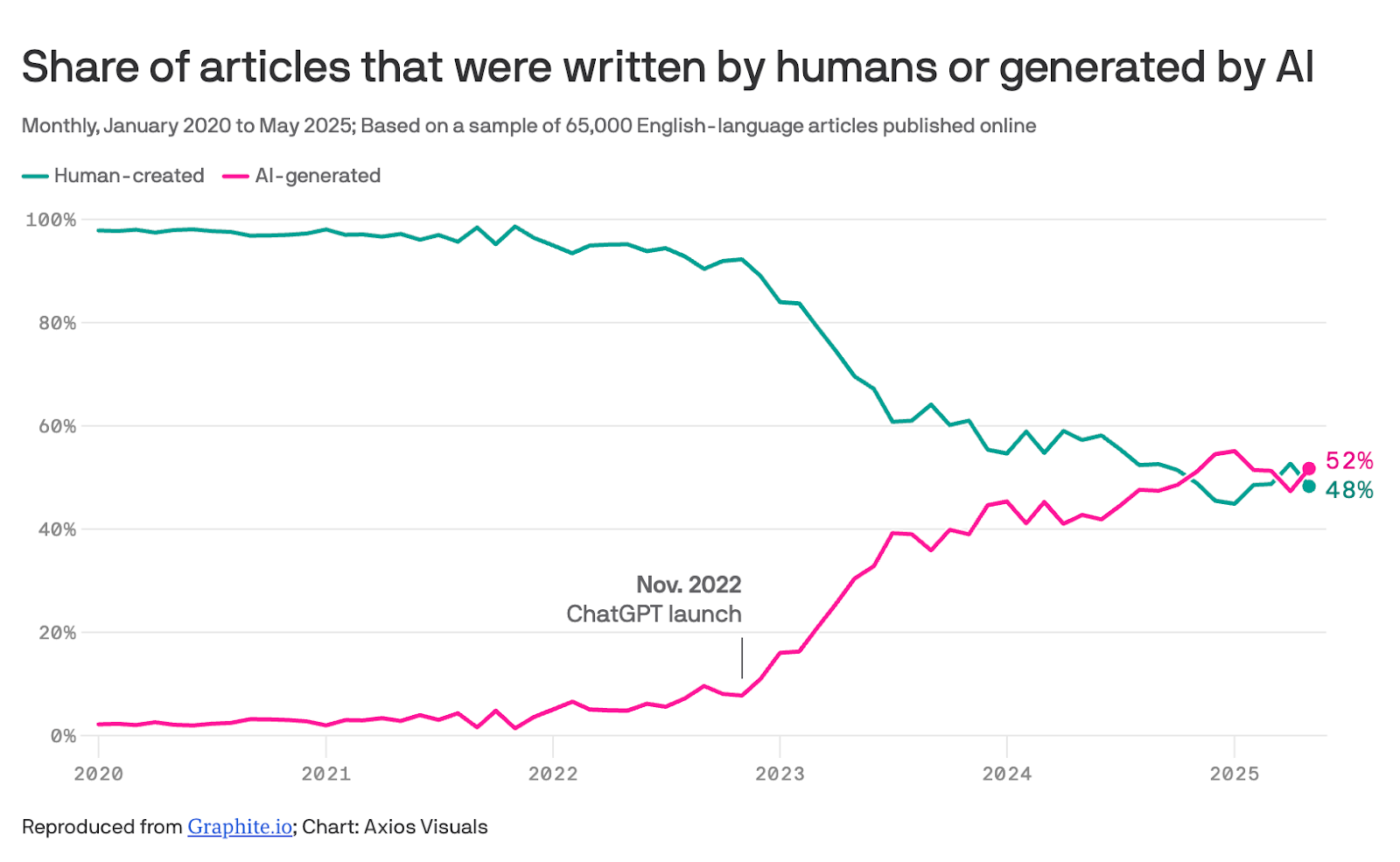
品牌们正疯狂追逐可见性,尤其是在标准和最佳实践尚未完全确立的当下。AI生成内容的激增就是一个鲜明信号。例如,早前就曾爆出某知名体育媒体因发布AI生成的文章而损害品牌信誉,且未能带来额外流量。
黑帽GEO带来的真实风险:不止是排名下降!

尽管Google不断强调E-E-A-T作为质量的“北极星”,但一些品牌仍在试探边界。AI工具让这些战术的执行更加快捷和规模化,随之而来的是新一轮黑帽实践的涌现。
严厉的搜索引擎惩罚: Google等搜索引擎正部署强大的AI检测系统(如SpamBrain),以识别并严惩这些违规行为,可能导致:
- 被移除索引(De-indexing)
- 手动操作处罚
- 算法降权
声誉与信任危机: 黑帽SEO的本质是操纵而非用户价值,这导致了糟糕的用户体验、垃圾内容和欺骗性行为,最终侵蚀品牌的可信度,损害其E-E-A-T。
“AI改变了游戏,但并未改变规则”
AI驱动平台的增长令人瞩目,但历史经验表明,最佳实践永远是获胜的关键。在LLM时代,黑帽SEO的本质并未改变:它们仍然是试图绕过规则,而非遵循规则。

如何应对AI时代的SEO挑战?
与其担心被竞争对手超越,不如拥抱更智能、更合规的策略!魔探(MageSeek)等智能体AI创作工具,能够帮助你:
- 高效产出高质量内容: 告别低效的人工撰写,让AI辅助你创作更具吸引力、更符合用户需求的内容。
- 优化社媒运营: 无论是小红书、抖音运营、视频号还是公众号,都能通过AI创作工具生成爆款文案和脚本,提升品牌在新媒体运营中的表现。
- 精准的品牌运营: 利用AI洞察用户行为,优化内容策略,让你的品牌运营更具前瞻性。
- 提升整体SEO表现: 遵循Google的E-E-A-T原则,利用AI辅助进行关键词研究、内容优化,从而稳健提升自然搜索排名。
立即使用魔探(MageSeek)等AI创作工具, 像拥有超能力一样,用数据和AI驱动你的智能体,彻底告别被动局面,主动出击,夺回属于你的流量和市场份额!
Is your organic traffic disappearing? See why competitors are outranking you and take back your visibility with Semrush. Input Instant analysis, no credit card needed. sel logo Newsletters Newsletters SEO SEO > All SEO > All SEO > What Is SEO?  > Google algorithm updates
  > Jobs
  > Ecommerce
  > Content
  > Enterprise
  > International
  > Link building
  > Local marketing
  > Generative Engine Optimization (GEO)
  > All topics PPC > All PPC > All PPC
  > What is PPC?
  > Paid search
  > Paid social
  > Video > Artificial Intelligence Optimization (AIO) > All topics Platforms > Google > Google
  > Amazon
  > Apple
  > DuckDuckGo
  > Meta
  > Microsoft
  > OpenAI
  > Pinterest
  > Reddit
  > Shopify
  > Snapchat
  > TikTok
  > Twitter
  > WordPress
  > YouTube
  > All library Guides > Digital PR for SEO: Backlinks, authority, and rankings > Digital PR for SEO: Backlinks, authority, and rankings
  > International SEO execution
  > ChatGPT for SEO: Boost rankings & automate workflows
  > Ecommerce SEO: Start where shoppers search
  > What is link equity and why does it still matter?
  > 44 best ChatGPT prompts for SEO
  > Local SEO predictions 2025
  > Content marketing strategy
  > Your guide to sitemaps
  > Digital PR for SEO
  > ALL GUIDES Tools > Keyword Research Tool > Keyword Research Tool
  > Keyword Difficulty Checker
  > Keyword Rank Checker
  > Keyword Generator
  > SERP Checker
  > Website Traffic Checker
  > Competitor Analysis Tool
  > Website Authority Tool
  > Backlink Checker
  > SearchBot
  > SearchBot Image Generator
  > Ad Calculators Resources > Webinars > Webinars
  > Intelligence reports
  > White papers > SEO Periodic Table > Mastering social media content creation > Mastering social media content creation
  > Best social media planning tools 2025
  > 57 Facebook statistics 2025
  > Ad Size Guide
  > Online Advertising Glossary SMX > SMX Advanced > SMX Advanced
  > SMX Next
  > SMX Master Classes
  > All SMX Events
  Awards
  Newsletter Search the Search Engine Land site Search search icon Search the Search Engine Land site Search Check my site’s SEO SEO Article Black hat GEO is real – Here’s why you should pay attention Published: Read Time: Published: Share
 Table of Contents Table of Contents AI-driven search has enabled large-scale manipulation. Here’s how it happens, what Google’s doing, and why best practices still win. Early algorithms weren’t sophisticated enough to detect these schemes, and sites that used them often ranked higher. Today, large language models power the next generation of search, and a new wave of black hat techniques are emerging to manipulate rankings and prompt results for advantage. The AI content boom – and the temptation to cut corners Overall adoption has jumped from 8% in 2023 to 38% in 2025. It’s no surprise that brands are chasing visibility – especially while standards and best practices are still taking shape. One clear sign of this shift is the surge in AI-generated content. Graphite.io and Axios report that the share of articles written by AI has now surpassed those created by humans. Two years ago, Sports Illustrated was caught publishing AI-generated articles under fake writer profiles – a well-intentioned shortcut that backfired. The move damaged the brand’s credibility without driving additional traffic. While Google continues to emphasize E-E-A-T as the North Star for quality, some brands are testing the limits. With powerful AI tools now able to execute these tactics faster and at scale, a new wave of black hat practices is emerging. Get the newsletter search marketers rely on.
  The new black hat GEO playbook Mass AI-generated spam LLMs are being used to automatically produce thousands of low-quality, keyword-stuffed articles, blog posts, or entire websites – often to build private blog networks (PBNs). The goal is sheer volume, which artificially boosts link authority and keyword rankings without human oversight or original insight. Fake E-E-A-T signals Search engines still prioritize experience, expertise, authoritativeness, and trustworthiness. Black hat GEO now fabricates these signals using AI to: Create synthetic author personas with generated headshots and fake credentials. Mass-produce fake reviews and testimonials. Generate content that appears comprehensive but lacks genuine, human-validated experience. LLM cloaking and manipulation A more advanced form of cloaking, this tactic serves one version of content to AI crawlers – packed with hidden prompts, keywords, or deceptive schema markup – and another to human users. The goal is to trick the AI into citing or ranking the content more prominently. Schema misuse for AI Overviews Structured data helps AI understand context, but black hat users can inject misleading or irrelevant schema to misrepresent the page’s true purpose, forcing it into AI-generated answers or rich snippets for unrelated, high-value searches. SERP poisoning with misinformation AI can quickly generate high volumes of misleading or harmful content targeting competitor brands or industry terms. The aim is to damage reputations, manipulate rankings, and push legitimate content down in search results. Dig deeper:
  Hidden prompt injection: The black hat trick AI outgrew The real risks of black hat GEO Even Google surfaces YouTube videos that explain how these tactics work. But just because they’re easy to find doesn’t mean they’re worth trying. The risks of engaging in – or being targeted by – black hat GEO are significant and far-reaching, threatening a brand’s visibility, revenue, and reputation. Severe search engine penalties Search engines like Google are deploying increasingly advanced AI-powered detection systems (such as SpamBrain) to identify and penalize these tactics. De-indexing Manual actions Algorithmic downgrading Reputation and trust damage Black hat tactics inherently prioritize manipulation over user value, leading to poor user experience, spammy content, and deceptive practices. Loss of credibility Erosion of E-E-A-T Malware distribution AI changes the game – not the rules The growth of AI-driven platforms is remarkable – but history tends to repeat itself. Black hat SEO in the age of LLMs is no different. While the tools have evolved, the principle remains the same: best practices win. Semrush About the Author
Jason Tabeling is the Head of Solutions for Further and is an accomplished marketing executive and proven leader with over 20 years of experience growing strong and profitable teams, working for and with Fortune 500 companies in a variety of industries. In his role he oversees the Solution teams which help enterprise business teams use data, cloud, and AI to grow and work more efficiently. Prior to Further, Jason served as CEO of AirTank an eCommerce software and services company. He has also played roles as Executive Vice President of Product for BrandMuscle, an enterprise software and services company focused on Fortune 1,000 brands, where he led product innovation and strategy. He also spent 16 years working with Rosetta, Razorfish and Progressive Insurance, leading Paid, Earned and Owned media teams across health care, financial services and retail verticals. He was named a \